PROPORTION,
RESOLVED
Dimensions and profile are considered in relationship to your cabinetry, cooking surface, and surrounding architecture, so the hood feels intentional within the space.
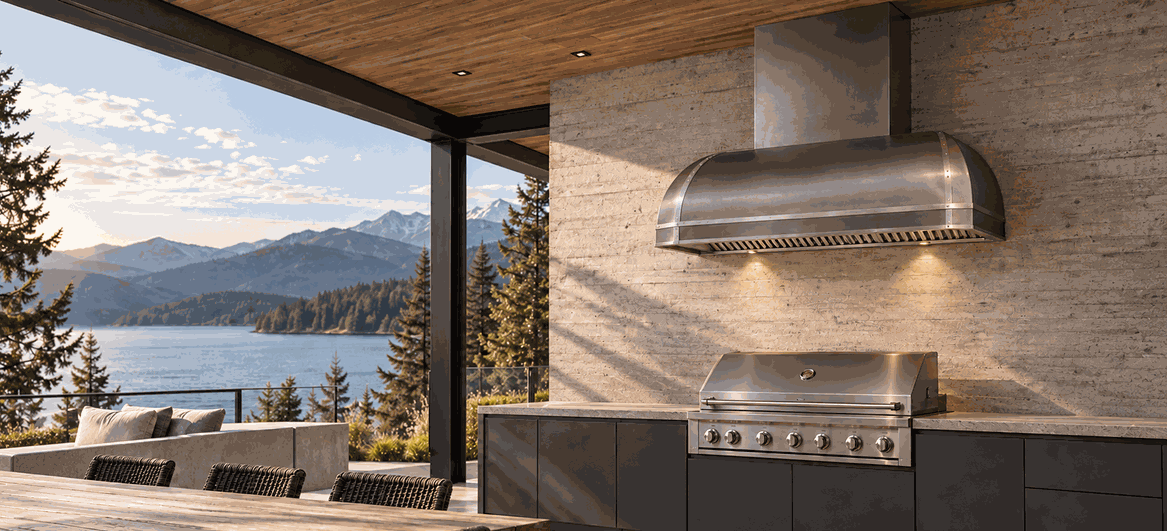
Outdoor Range Hoods for Hospitality, Multifamily & Residential Development
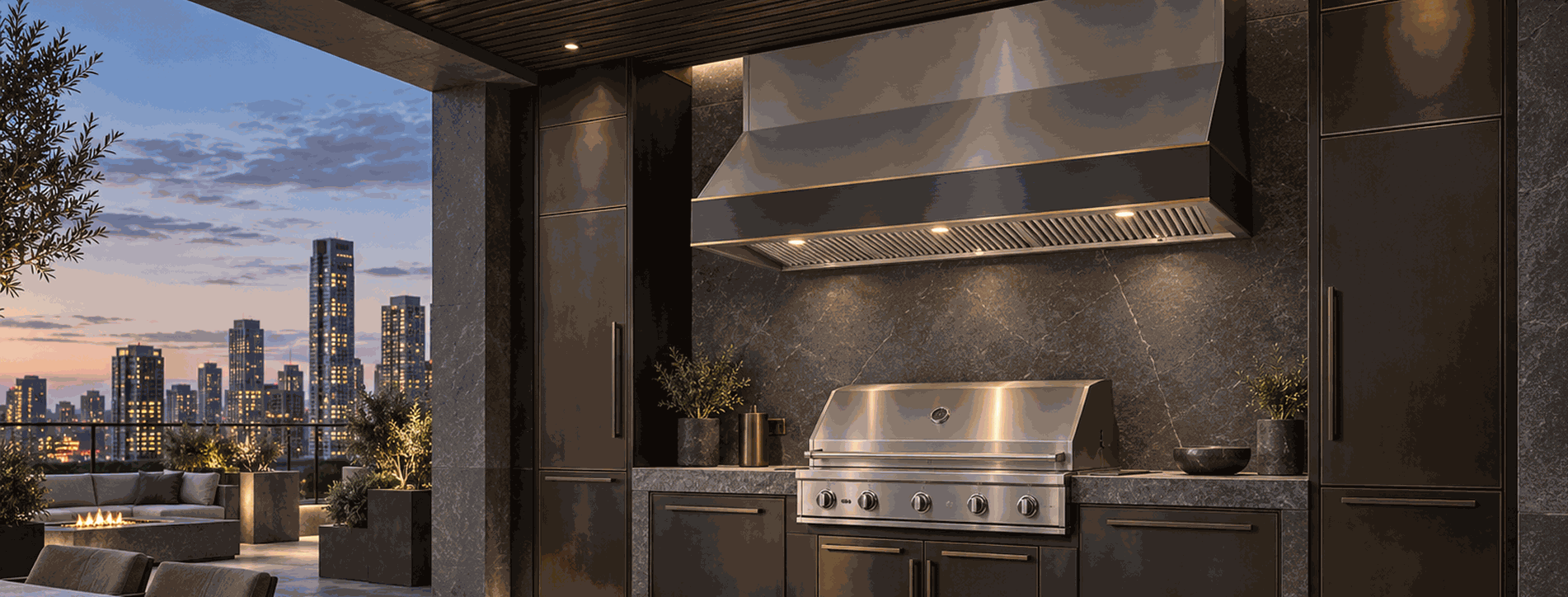
CopperSmith outdoor range hoods bring architectural presence and ventilation performance to covered outdoor kitchens and entertaining spaces. Material, proportion, finish, architectural detail and ventilation requirements are resolved together, creating a hood that feels integral to the larger environment.
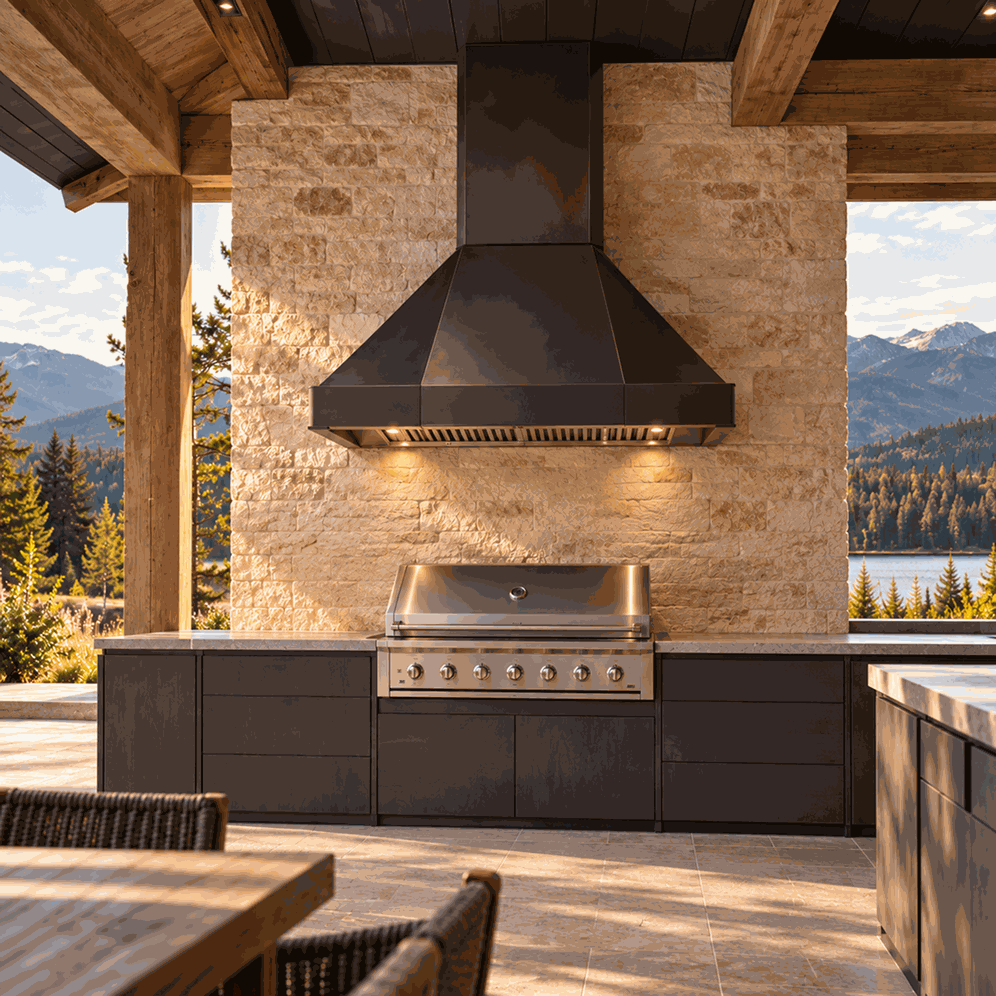
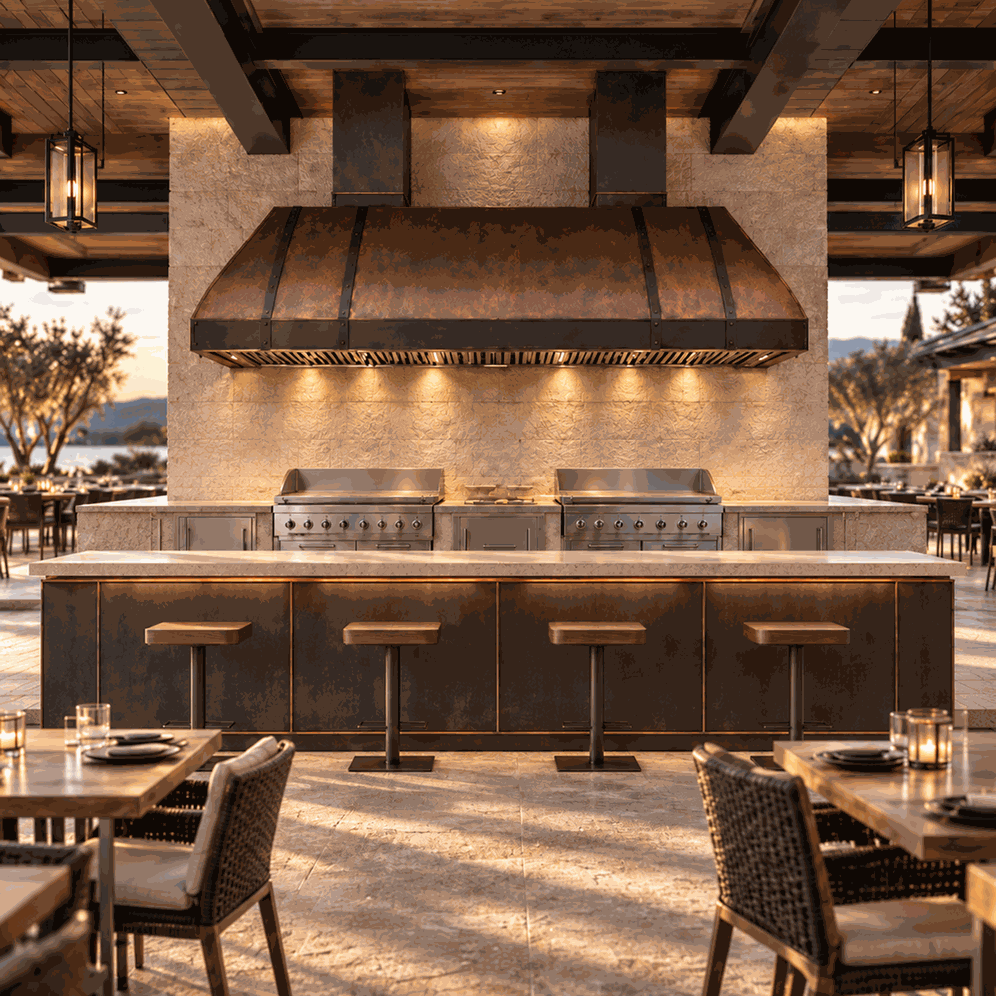
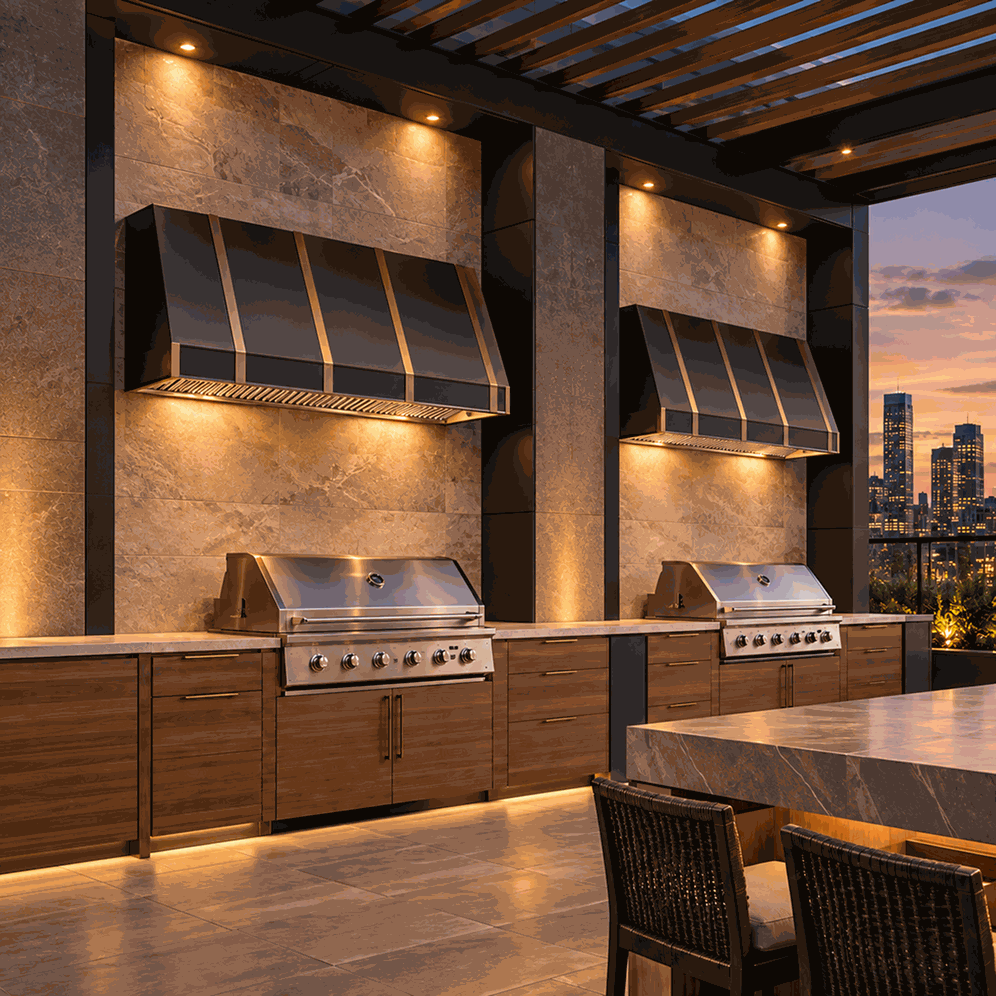
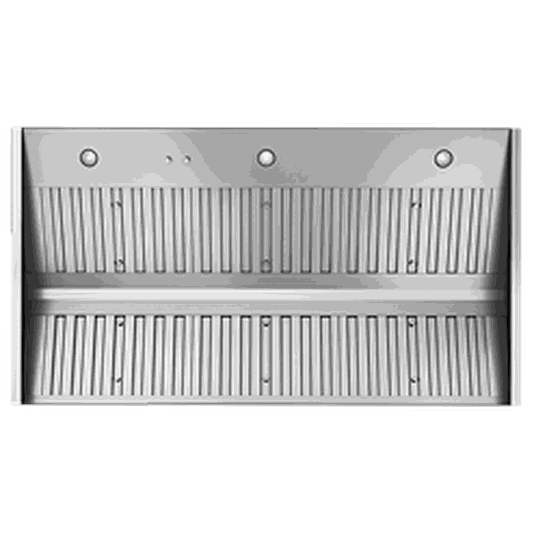
High-capacity ventilation engineered to manage smoke, heat, and grease in outdoor kitchens.
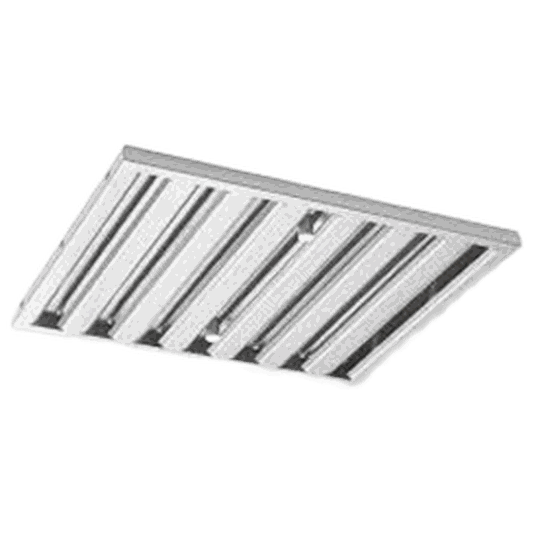
Professional stainless steel baffles capture grease while maintaining steady, efficient airflow.
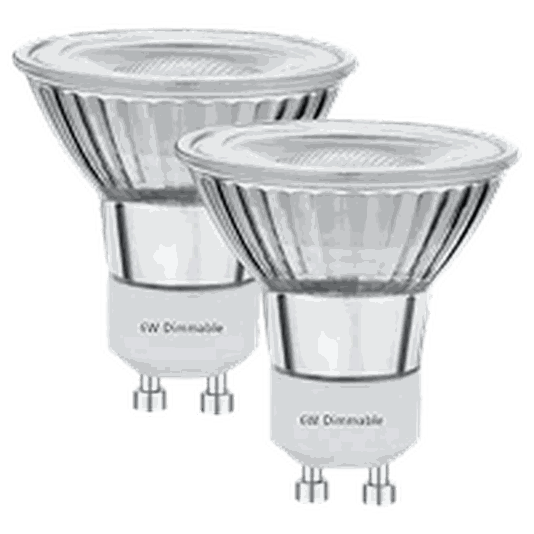
Bright, energy-efficient illumination improves visibility across the entire outdoor cooking surface.
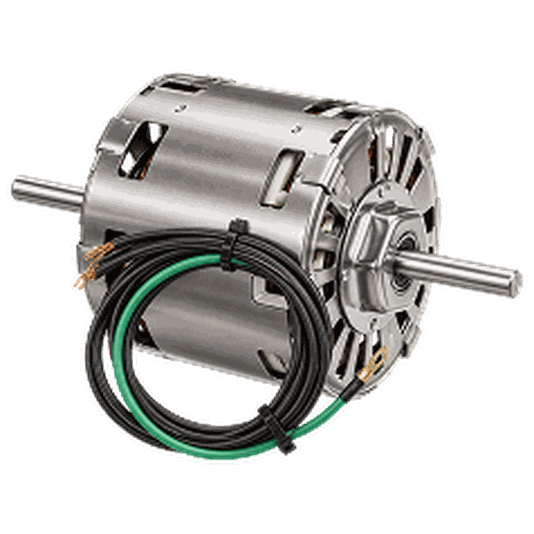
Premium-grade motor delivers dependable airflow and consistent performance under demanding cooking conditions.
Real materials. Distinctive finishes. Defined around your project.
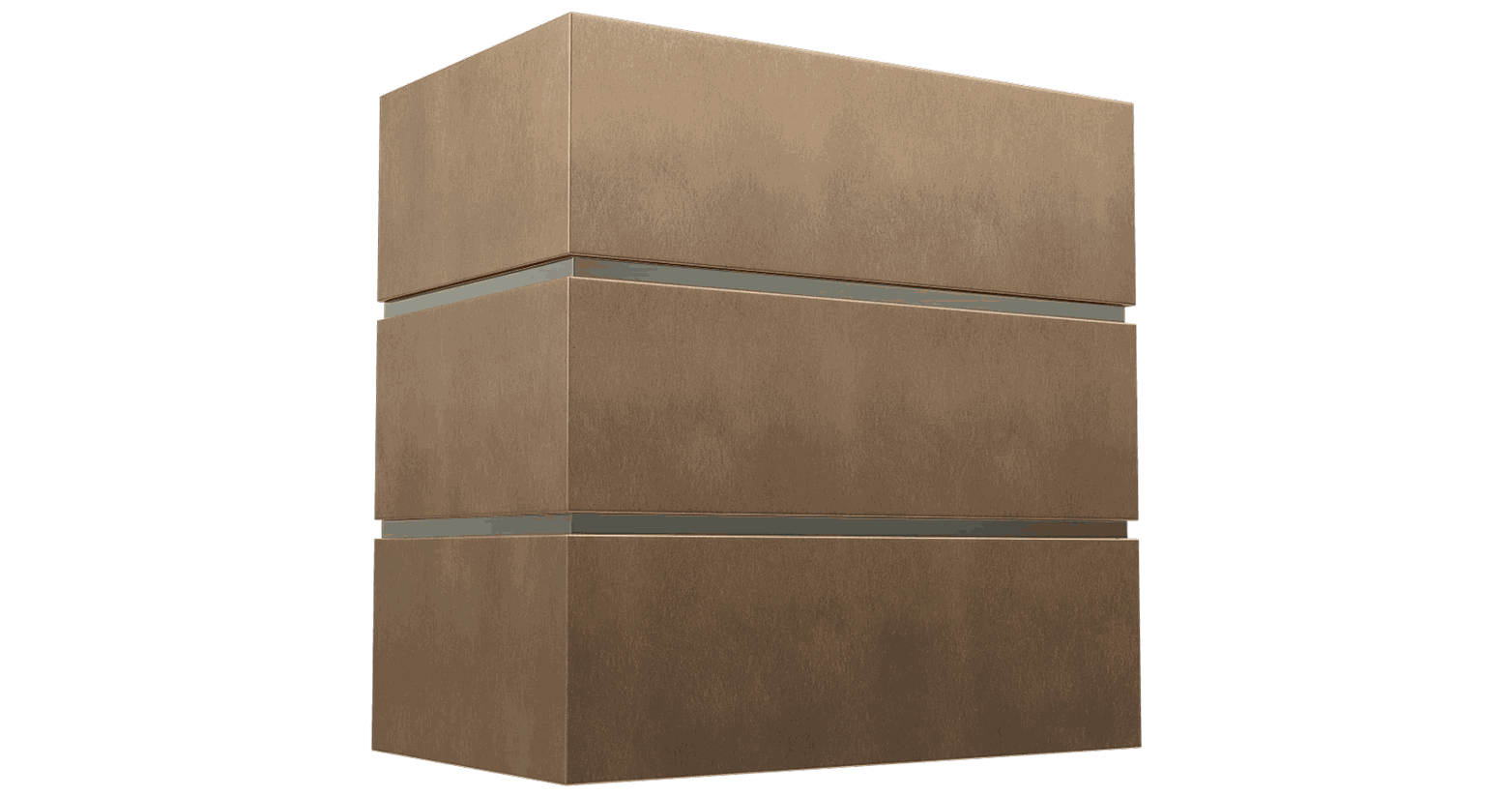
Explore copper, stainless steel, powder-coated metal, wood, and a considered range of finishes developed to work with the surrounding space.

Copper

Brass

Stainless Steel

Powder-Coated

Wood
Dimensions and profile are considered in relationship to your cabinetry, cooking surface, and surrounding architecture, so the hood feels intentional within the space.
Ventilation is engineered alongside the design, bringing performance requirements and architectural intent together from the start.
Real metal, finish, and architectural details are selected for what they bring to the larger design, from tone and contrast to texture, variation, and character.
Detailed CAD drawings bring every decision together before fabrication. Once approved, those specifications guide production through the finished piece.
ARCHITECTURAL METALWORK FOR DESIGNED SPACES.
 Based on thousands of third-party reviews.
Explore the possibilities and make your initial selections. Our team is available to guide dimensions, material, finish, performance, and architectural details.
We translate your selections into a detailed CAD drawing so you can review dimensions and key specifications before fabrication.
With the drawing approved, your piece moves into fabrication and finishing, guided by the specifications you've reviewed.
Your finished piece is inspected, carefully packaged, and coordinated for delivery to your project.
Have a question about your design, dimensions, finish, or next step? Our team can help you resolve the details and move your project forward with confidence.
THE ARCHITECTURAL HOOD AND THE VENTILATION PLAN, DEFINED TOGETHER.
A grill changes the demands on an outdoor kitchen: heat, smoke, grease, and moving air all affect the hood above it. CopperSmith® BBQ range hoods bring real-metal presence and project-specific ventilation planning to residential outdoor kitchens, hospitality amenities, and multifamily gathering spaces. Proportion, material, finish, insert, and duct route are resolved around the cooking equipment and the architecture of the setting.
Define the hood's width, depth, mounting position, and visual line against the grill, counters, wall, and overhead structure. Select a real-metal shell and a compatible finish with the site's exposure in mind. Physical samples help the team evaluate the surface beside stone, cabinetry, and surrounding materials before the design is approved.
The selected BBQ range hood insert establishes the working capture area, baffle filters, lighting, controls, and blower arrangement. Current CopperSmith® integrated BBQ insert configurations include 1,200 or 2,300 CFM options depending on size; a liner-only option can work with a compatible separately specified blower. Hood geometry, mounting height, wind exposure, duct resistance, and grill requirements all influence the final system design.
For hospitality and multifamily projects, project teams can align a common hood design with site-specific grill and mechanical requirements. A CopperSmith® specialist helps translate the selected form and ventilation into drawings before fabrication, while the project mechanical professional confirms the code and installation requirements for each location.
Explore outdoor tables and fire pits for related metalwork. Start your project with the grill specification, plans, and intended use so the hood and ventilation can be reviewed as one assembly.
The hood is the visible architectural metal enclosure. The BBQ insert is the working ventilation assembly inside it, with a liner, baffle filters, lighting, controls, and a blower arrangement selected for the project.
Current integrated BBQ insert configurations include 1,200 and 2,300 CFM options, depending on size. A liner-only option can be paired with a compatible separately specified blower. Airflow must be evaluated against the grill and complete duct system.
There is no universal overhang that works for every outdoor kitchen. Grill dimensions, mounting height, hood depth, nearby walls, wind exposure, and the selected insert determine the required capture area.
No. A BBQ insert is intended to exhaust cooking air through a properly designed exterior duct route. Do not substitute a recirculating kitchen hood system.
Current BBQ insert configurations include baffle filters and lighting within the specified liner assembly. Confirm the selected model's controls, lamp type, motor, and included components in its current documentation.
Covered outdoor kitchens are a potential application. The hood finish, insert exposure rating, electrical components, and location must be checked against the selected equipment instructions and site conditions.
They can be specified for hospitality or multifamily outdoor cooking spaces when the design and selected ventilation equipment meet the specific project's requirements. The design team must confirm applicable use classification, fire protection, permits, and local code.
No. A restaurant cooking line may require a different listed exhaust and fire-protection system. The project mechanical and code team must determine the required system before a CopperSmith® hood or insert is specified.
Provide the grill make and model, cooking equipment dimensions, location and exposure, site drawings, intended hood size and material, available duct route, project type, and target timing.
Project-specific drawings document the hood proportions and the selected compatible insert arrangement. The project team must also approve the grill clearances, structure, ductwork, electrical service, and any applicable local requirements.
CopperSmith® outdoor range hoods are specified as architectural metalwork around a grill and its ventilation system. Hood dimensions, material, finish, insert, blower, duct route, and site conditions are reviewed together before fabrication.
Insert dimensions, CFM, electrical requirements, exposure ratings, duct connections, and allowed installation details depend on the selected equipment. The current manufacturer documentation and the project mechanical professional govern the final system and any applicable building, fire, and ventilation requirements.

 By submitting, you agree to our Privacy Policy & Terms